Skip to content

Siding · James Hardie Siding

James Hardie fiber cement siding

The material we recommend most often — it holds its colour, it takes a knock, and it does not soften in the heat.

  • Free, no-obligation inspection
  • No payments until completion
  • Industry-leading warranties

Get Your Free Estimate

60 seconds · no obligation · same-day callback

Your info is safe. We never sell your data.

Fiber cement is cement, sand and cellulose, and it behaves nothing like vinyl on the wall or in the hands of the crew fitting it. It holds paint far longer, it does not crack when something hits it, and it stays dimensionally stable across a temperature range that pulls other materials in and out all year. It costs more up front than vinyl and it is less forgiving to install, which is the whole of the trade-off and the reason the installation details below matter more than the brochure.

Our work

James Hardie homes we've completed

Real projects by our crews — no stock photography. More are on the way.

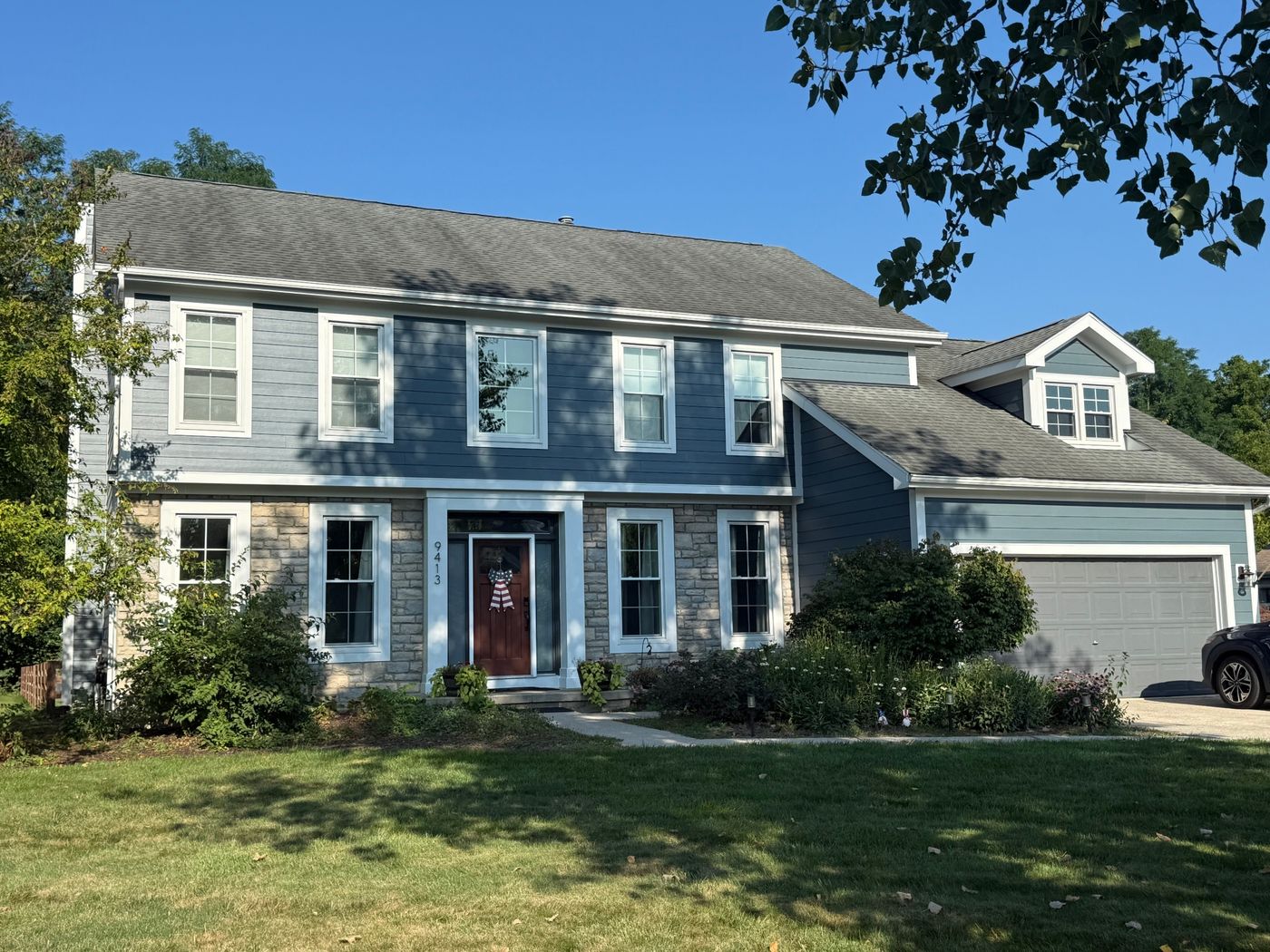
  • Two-storey home in the Columbus area with new James Hardie fiber cement siding in slate blue
    James Hardie fiber cementFull re-side, Columbus area — completed 2026
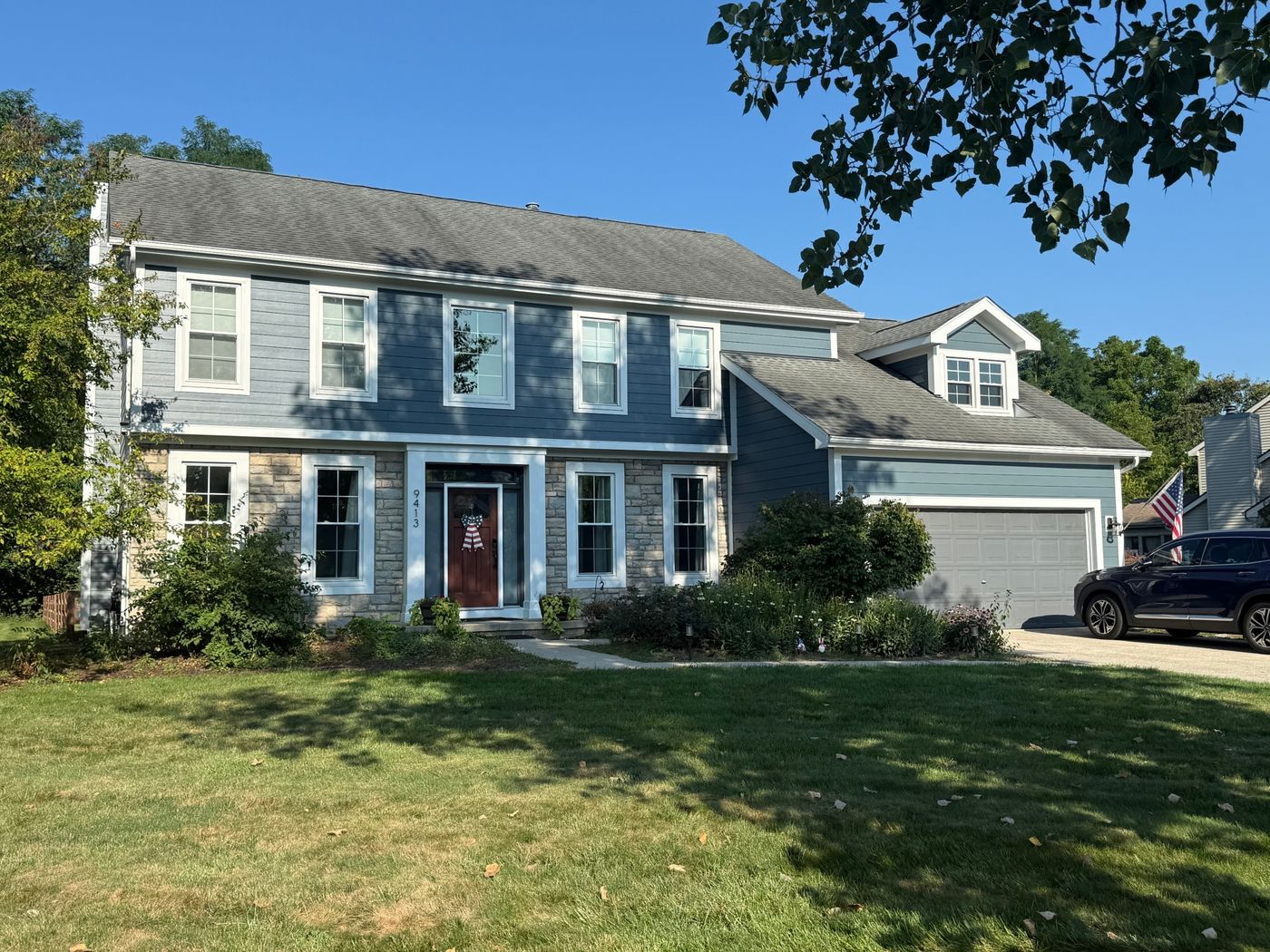
  • Corner view of the same Columbus-area home showing James Hardie lap siding and white trim
    James Hardie fiber cementLap siding with wrapped trim, Columbus area
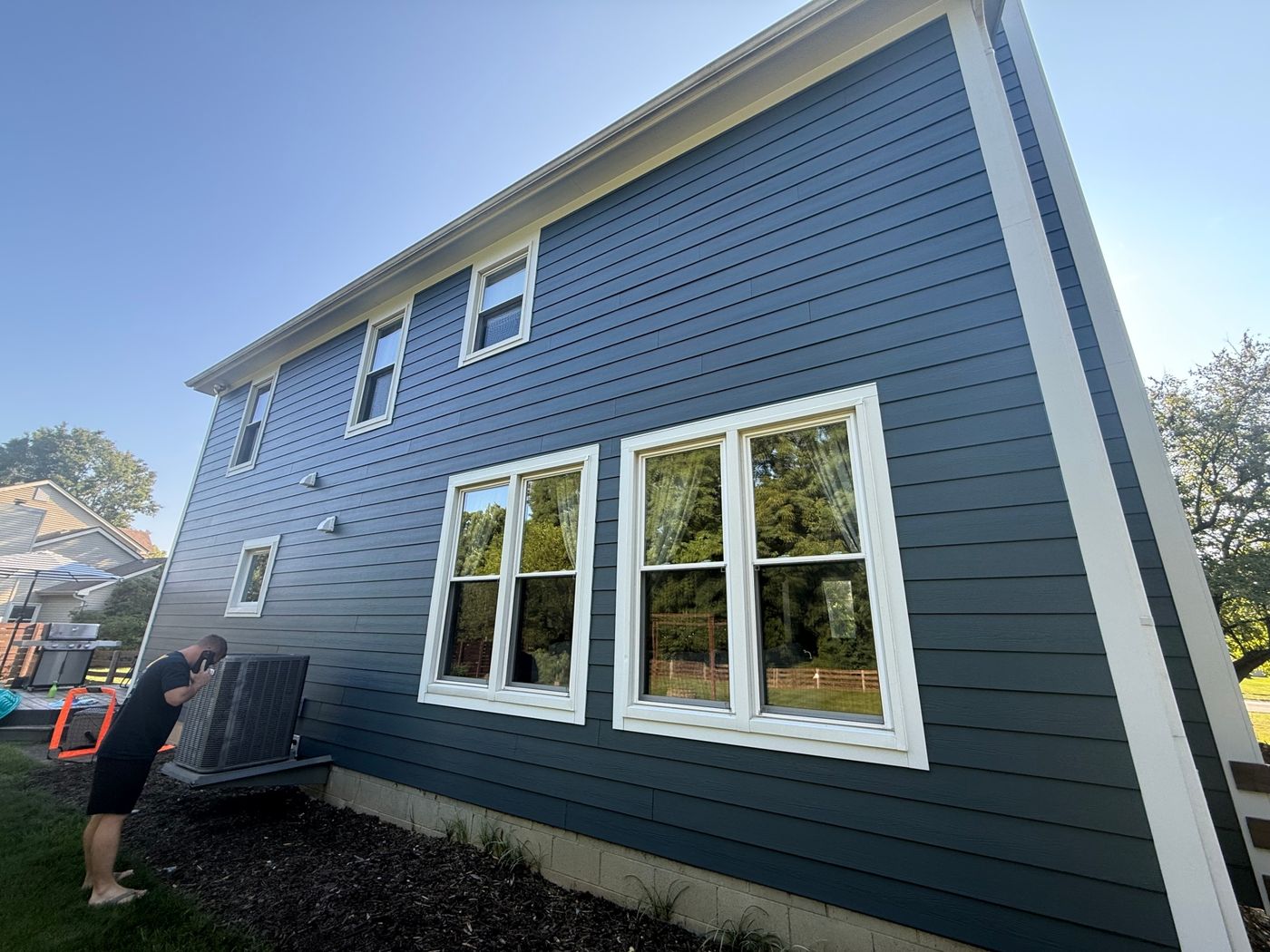
  • Rear elevation with new James Hardie lap siding and new white window trim
    James Hardie fiber cementRear elevation, same project — every side matters
  • Project photo pending

    More completed homes are being added — real projects only, never stock.

  • Project photo pending

    More completed homes are being added — real projects only, never stock.

What the work involves

What a james hardie siding job covers

Why fiber cement

It holds colour, stands up to impact, does not soften in heat, and gives insects nothing to eat. It costs more than vinyl up front and lasts longer.

ColorPlus or site-painted

Factory-applied finishes arrive consistent and hold longest. Site painting gives you any colour you like. We quote both and say which we would choose.

Installation is the whole thing

Fastener spacing, clearance at grade and the roofline, and the detail at butt joints are what the warranty actually rests on. Done wrong, the material is not the problem.

Trim and detailing

Matching trim at corners and openings so the whole elevation moves together and the joins stay tight.

About the material

Fiber cement is a different job, not a different colour

Everything that makes fiber cement worth buying also makes it unlike vinyl to fit. These are the four things that decide whether it performs the way it should.

It is heavy, and that changes the crew

A fiber cement plank weighs several times what a vinyl panel does. It needs more hands, different fastening and a substrate that can carry it, and it does not forgive being hung on a wall nobody checked first.

It is cut rather than snapped. Cutting it releases silica dust, so it is cut with the right blade and the right dust control — a working practice rather than a preference, and one worth asking any contractor about.

Clearances are where installations fail

Fiber cement has specified gaps: above the roof line, above decking and other horizontal surfaces, and at grade. Those clearances exist because the board will wick water if it sits in it, and wicked water in a climate that crosses freezing splits the board from the inside out.

It is the single most common fault we find on fiber cement somebody else fitted. The board is fine. It was installed tight to a roof and has been drinking for three winters.

ColorPlus or site-painted

A factory finish is baked on, arrives consistent across every plank, and holds longest. Site-painted means primed board finished on the wall: it costs less, it lets you pick any colour at all, and the finish is only ever as good as the conditions on the day it went on.

Neither is wrong. Factory finish for longevity and consistency, site paint for colour freedom or for matching something that already exists. We will quote either and tell you which we would put on our own house.

What you are actually buying

Dimensional stability. Fiber cement does not soften in summer heat or grow brittle in a hard freeze, and it does not move enough to open its own joints. In a climate that swings hard in both directions, that is worth more than it sounds on paper.

The trade-off stated plainly: it costs more than vinyl, it is heavier and slower to work with, and a bad installation is more expensive to put right. It is the better material and it is the less forgiving one.

What happens next

How a james hardie siding job runs

  1. Free inspection

    We check the wall, the substrate and how the existing course was fitted before quoting anything.

  2. Finish and colour

    ColorPlus or site-painted, with samples held against your roof and trim in daylight.

  3. Removal and repair

    The old siding comes off and the sheathing is inspected. Fiber cement is heavy, so what it hangs on gets checked properly.

  4. Installation and finish

    Fastening, clearances and trim to specification, with the site cleared at the end of each day.

Why homeowners choose us

Straightforward from quote to cleanup

Honest, upfront pricing

A clear written quote after a free inspection — no surprises and no pressure afterwards.

One project manager, start to finish

The person who quotes the job runs the job, and is the person you call afterwards.

Backed by industry-leading warranties

Industry-leading warranties, fully licensed and insured, and one team for the whole exterior.

What we install

Materials from manufacturers who stand behind them

We install products with real manufacturer warranties and training behind the installation, because a warranty is only as good as the crew that fits the material.

  • James Hardie
  • GAF
  • Owens Corning
  • CertainTeed
  • ProVia
  • Royal Building Products
  • Norandex
  • WinCore Windows
Good to know

Common questions

Hardie or vinyl?

Hardie costs more up front, lasts longer, holds colour better and takes an impact without cracking. Vinyl costs less and is perfectly good when installed well. We quote both and let you decide.

Does it need painting?

Eventually, but far less often than wood and much less often than most people expect. A factory-applied finish goes longest.

Why does the installation matter so much?

Because the warranty rests on it. Fastener spacing, butt-joint detail and the specified clearances at grade and roofline are what keep water out of the board, and they are exactly what gets skipped on a fast job.

Is it worth the extra over vinyl?

On most houses we think so, for the colour retention and the impact resistance. On a rental or a short hold, vinyl fitted well is a sound decision and we will say so.

Is the inspection really free?

Yes. The inspection and the written quote are free and carry no obligation, and nobody will lean on you afterwards.

Who actually does the work?

Coldstream crews in every market we run — and the person who quotes the job stays on the job from the first walk-through to the final cleanup.

What does the warranty cover?

Industry-leading warranties on what we install, alongside whatever the manufacturer warrants on the material itself. Licensed and insured in every market we work in.

Ready for a free, no-pressure estimate?

Tell us what you need and we will take a look. Call (844) 426-8222 or send the form.

Get My Free Estimate →
or call (844) 426-8222
Free Estimate