Skip to content

Roofing in St. Louis

Roofing in St. Louis

Replacement, repair, and storm work — residential. Shingle and low-slope systems, quoted after a free inspection.

  • Free, no-obligation inspection
  • No payments until completion
  • Industry-leading warranties

Get Your Free Estimate

60 seconds · no obligation · same-day callback

Your info is safe. We never sell your data.
What we do

Roofing services in St. Louis

Roofs here fail in ways that are specific to this place. Straight-line wind and hail come through most summers, and the temperature swing between seasons is wide enough to work materials hard — expansion and contraction opens seams and fasteners over time. South County is mid-century ranches through Affton, Mehlville and Oakville — simple pitches, long runs. The city neighbourhoods around Tower Grove and The Hill are brick with parapet walls and low-slope rear additions, which is a different roof entirely. West County runs to larger, newer homes with complex rooflines. We quote after walking the roof, because the same age of shingle on two houses a street apart can be in very different condition once you are standing on it. St. Louis County and the municipalities permit separately, and Jefferson County is different again. We pull them.

Roof Replacement

Full tear-off and installation. We size and price the job after walking the roof, not from a satellite image.

Roof Repair

Leaks, emergency call-outs, storm, hail and wind damage — all one repair conversation rather than five separate ones.

Storm and Insurance Claims

We document the damage the way an adjuster needs it documented, then deal with them directly.

What the inspection is looking for

What separates a roof that lasts from one that doesn't

Hail is the headline here

This metro sits closer to hail country than either of our Ohio markets, and it shows in the work: hail drives more replacement conversations here than age does. The inspection documents impact damage the way a carrier needs it — circle by circle, slope by slope — because a storm that hit Ballwin hard can have brushed Chesterfield and skipped Kirkwood entirely.

Impact-resistant shingles earn their premium in this pattern, and we say so when the roof and the budget make the case.

Storm season is also insurance season

Severe weather from spring into summer means the busiest inspection weeks follow the loudest nights. Fresh damage is easiest to attribute while it is fresh: the assessment separates what the storm did from what the years did, in writing, before an adjuster asks — a distinction that decides claims from Florissant to O'Fallon.

Heat load and the freeze on either side of it

Summer here puts real heat into a shingle roof and the winter that follows still crosses freezing — the spread works fasteners loose and opens laps year by year. Ventilation carries more of the lifespan here than most homeowners expect, and shaded, slow-drying slopes in the older tree streets of Webster Groves get read closely for moss and held moisture.

On the roof

How a roof actually goes on.

Most people never watch their own roof get replaced. Here is what the crew is doing up there, in the order it happens.

  1. Tear-off

    We strip the old shingles back to the bare deck. That is when soft spots and old water damage turn up, and we show you what we find before anything covers it again.

  2. Underlayment

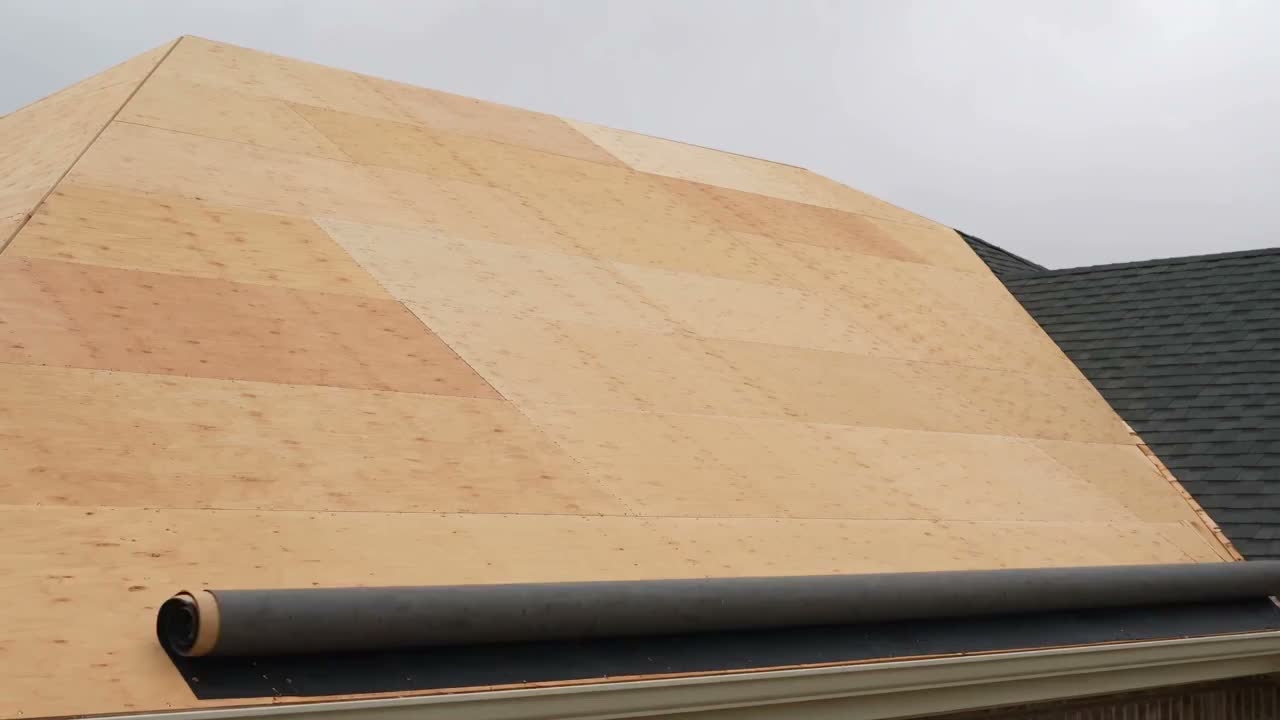
    A water-resistant layer goes down over the deck, with extra protection in the valleys and along the eaves. It is the part you never see and the part doing the quiet work.

  3. Shingles

    Shingles go on from the bottom up, each row lapping the one below it. Nail placement matters more than it looks — get it wrong and a roof ages years early.

  4. Ridge cap

    Capped shingles finish the peak and the ridge vent lets hot air leave your attic. Then we run a magnet over the lawn and the drive until the nails are gone.

What happens next

How a roofing job runs

  1. Free inspection

    A thorough inspection — we photograph what we find and check the decking, flashing and ventilation — not a satellite image of it.

  2. Written scope and quote

    Materials, tear-off, ventilation and the number, in writing before anything is ordered.

  3. Tear-off and installation

    Our own crew, on the day we said. Most homes are stripped and re-covered inside one day.

  4. Clean-up and walkthrough

    A magnet run over the whole property for nails, a walk of the job with you, and nothing due until it is finished.

Why homeowners choose us

Straightforward from quote to cleanup

Honest, upfront pricing

A clear quote after a free inspection — no surprises, no pressure, no games on price.

One project manager, start to finish

The person who quotes the job runs the job, and is the person you call afterwards.

Backed by industry-leading warranties

Industry-leading warranties, fully insured, and one team for the whole exterior.

Where we work

Roofing across Greater St. Louis

We work across Greater St. Louis, out of our St. Louis office. Here are the towns our crews are in most often.

Based at our St. Louis office.

South County and South City

South County and the southern city — Kirkwood, Webster Groves, Sunset Hills, Oakville, Mehlville, Affton and down through Fenton to Arnold.

West County and North County

West County and the inner ring — Chesterfield, Town and Country, Creve Coeur, Clayton, Des Peres and Maryland Heights — plus Berkeley in North County.

Don't see your town? It is probably still a yes — call (314) 380-8111 and we will tell you straight away.

Good to know

Common questions

What should I expect from a roof in St. Louis?

Straight-line wind and hail come through most summers, and the temperature swing between seasons is wide enough to work materials hard — expansion and contraction opens seams and fasteners over time. A well-installed architectural shingle roof handles that, but the details decide it — ventilation, ice-and-water membrane at the eaves, and flashing that was replaced rather than caulked over.

Do I need a full replacement or a repair?

That is what the free inspection answers. Age, the state of the decking and how widespread the damage is decide it — we will tell you when a repair is the honest answer.

How long does a roof replacement take?

Most homes are finished in a single day. We give you the timeline up front and leave the property clean.

Do you work with insurance companies on storm damage claims?

Yes. We document the damage the way an adjuster needs it documented — photographs, measurements and a written scope — and we meet them on site. What gets approved is the carrier's decision, not ours, and we will not tell you otherwise before it happens.

How quickly can you get out after a storm?

Same day or next day for anything actively letting water in. The first visit stops the damage getting worse; the assessment and the quote follow once the roof is safe to walk.

What roofing materials do you install?

Architectural asphalt shingle on most homes, impact-resistant shingles where hail is the recurring problem, and flat systems for low-slope sections. The specification follows the inspection rather than a default.

What does a new roof cost?

Size, pitch, how many layers come off, the state of the decking underneath and the material you choose. We put the number in writing after the free inspection, and it does not move unless the scope does.

What do I need to do before the crew arrives?

Move vehicles off the drive and take anything fragile off the walls in the top rooms. We cover the landscaping, protect the gutters and run a magnet over the whole property before we leave.

Can you replace a roof in winter?

Yes, with the right conditions and materials — shingle adhesives need temperatures the forecast has to cooperate on, and we schedule around cold snaps rather than pretending they are not happening. Emergency repairs do not wait for spring.

Do you tear off the old roof or lay over it?

Tear off, always. An overlay hides the decking — the one thing that decides whether the new roof has something sound to fasten to — and most shingle manufacturers reduce or void coverage over a second layer.

How long should a roof last here?

Architectural asphalt is typically rated for decades, but ventilation and installation quality decide whether it gets there — an attic that cannot breathe shortens any shingle's life. Hail and wind can end a roof early regardless of age, which is what the free inspection is for after a storm.

Ready for a free, no-pressure estimate?

Tell us what you need — we'll take a look and give you an honest number.

Get My Free Estimate →
or call (314) 380-8111
Free Estimate